
Magnetometers are also commonly called Magnetic Locators. Schonstedt invented this instrument in the 1950’s and they have always been the most popular manufacturer, so these are also often simply called “a Schonstedt”. However, this is not a good decision because Schonstedt also manufactures other types of geophysical instruments as well such as PCLs.
Magnetometers are most commonly used by surveys in detecting old survey monuments or Control Points.
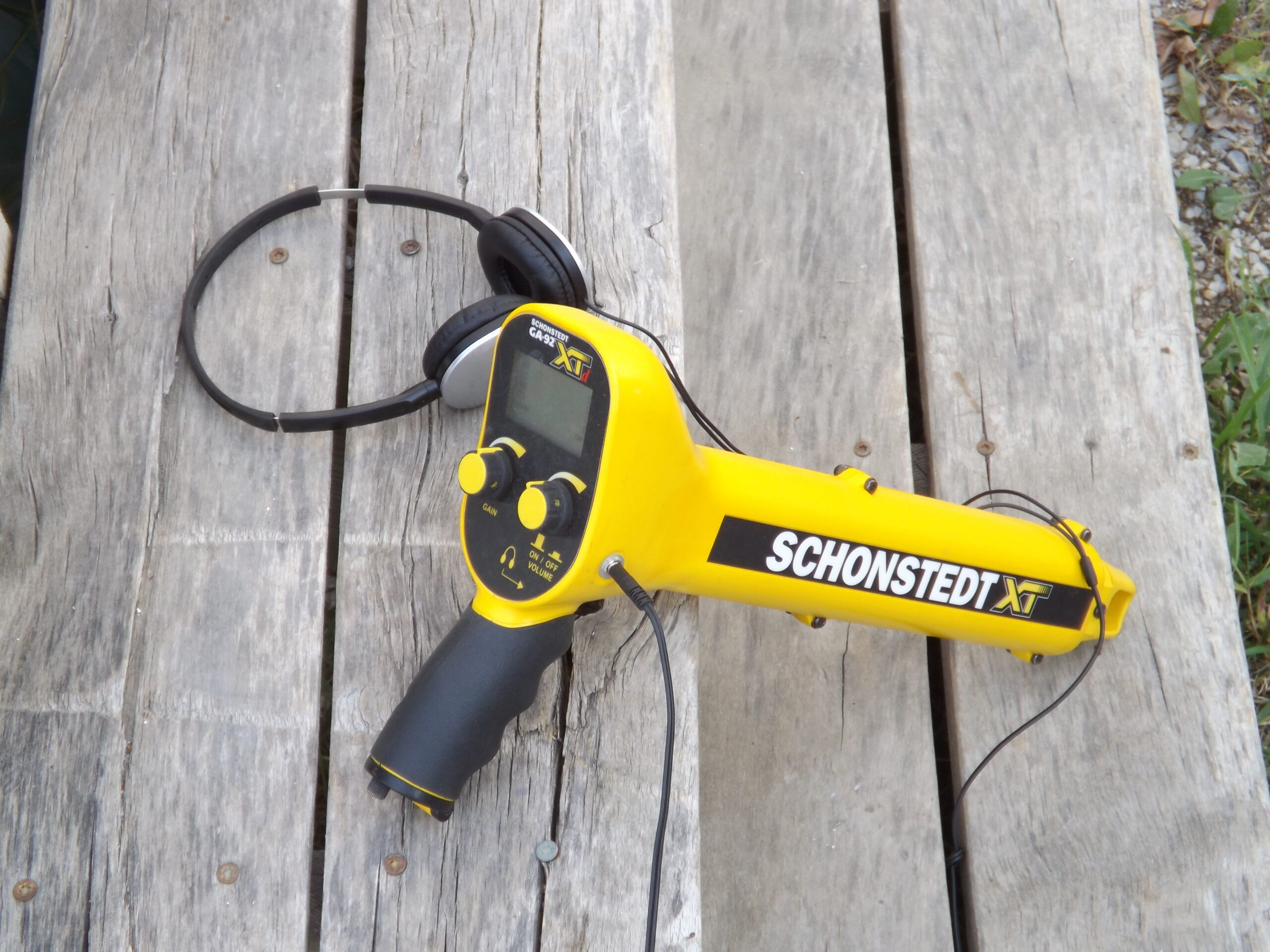
They function by detecting the natural magnetic flux which occurs between the edge of metallic objects and the surrounding soil. This is especially true with any ferrous metal object (iron or steel) and is even more noticeable with PK nails (used as Control Points) because they have an inner magnetized core.
However, any ferrous metal object can be detected and usually at sizeable depths, even theoretically up to depths of 25 feet.
Magnetometers are moved back and forth when searching for a signal, but once on that signal they can be held still to pinpoint the flux. This is an important difference. Magnetometers do not detect the metal – they detect the flux which is occurring at the edge of the metal. If the target is a PK nail, the difference here
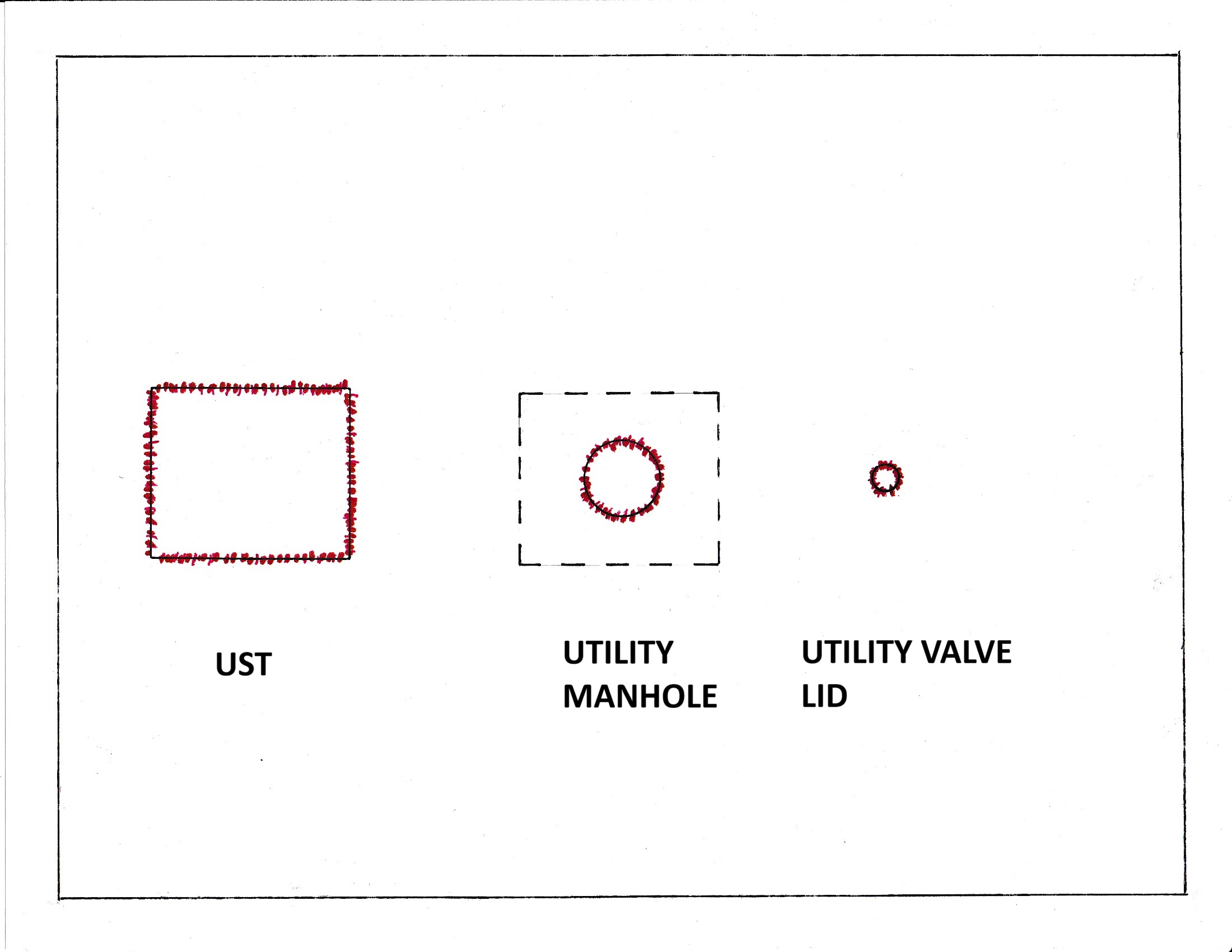
will not be noticeable. But with an object such as a buried manhole lid, the magnetometer is detecting the outer rim of the iron lid. This is the strongest region of magnetic flux.
This means that PK nails, water valve lids, and manhole lids are typically easier to identify separately because you are getting a response around the diameter of the object giving you a general idea of the size of the target. Magnetometers can also be used to determine the outer edge of Underground Storage Tanks (USTs) as long as they are made of steel, which most are.
Another use of mags is to determine the end point of a buried pipe. A PCL is not useful here because the current on the pipe will extend out into the soil, and therefore produce a gradual loss of signal, not a solid end point. But a magnetometer can pin down the end point of any iron or steel pipe because there will be a natural magnetic flux where the end of the pipe interacts with the soil.