
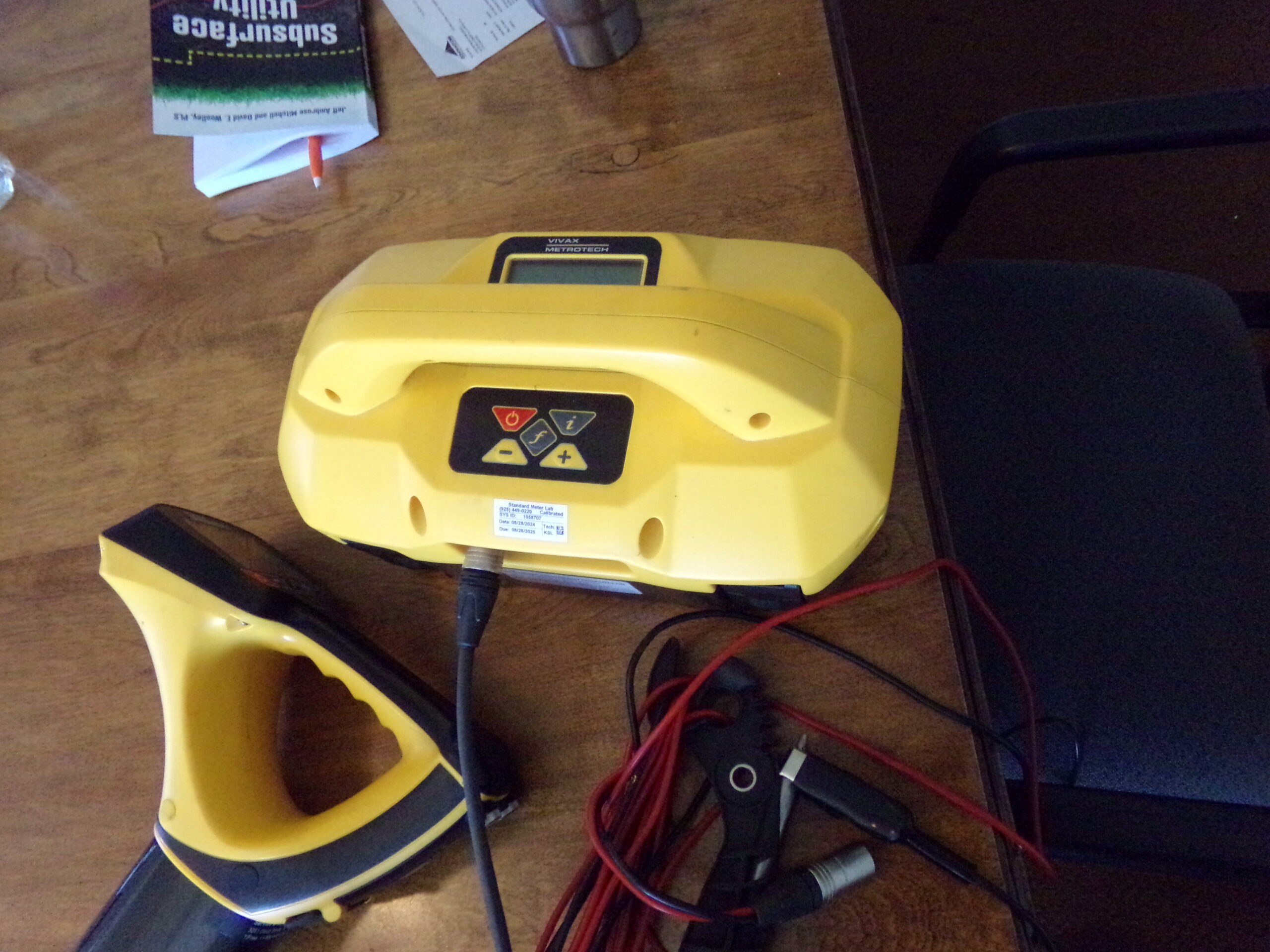
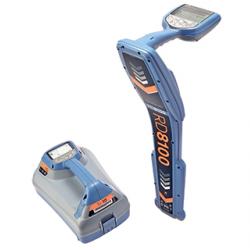
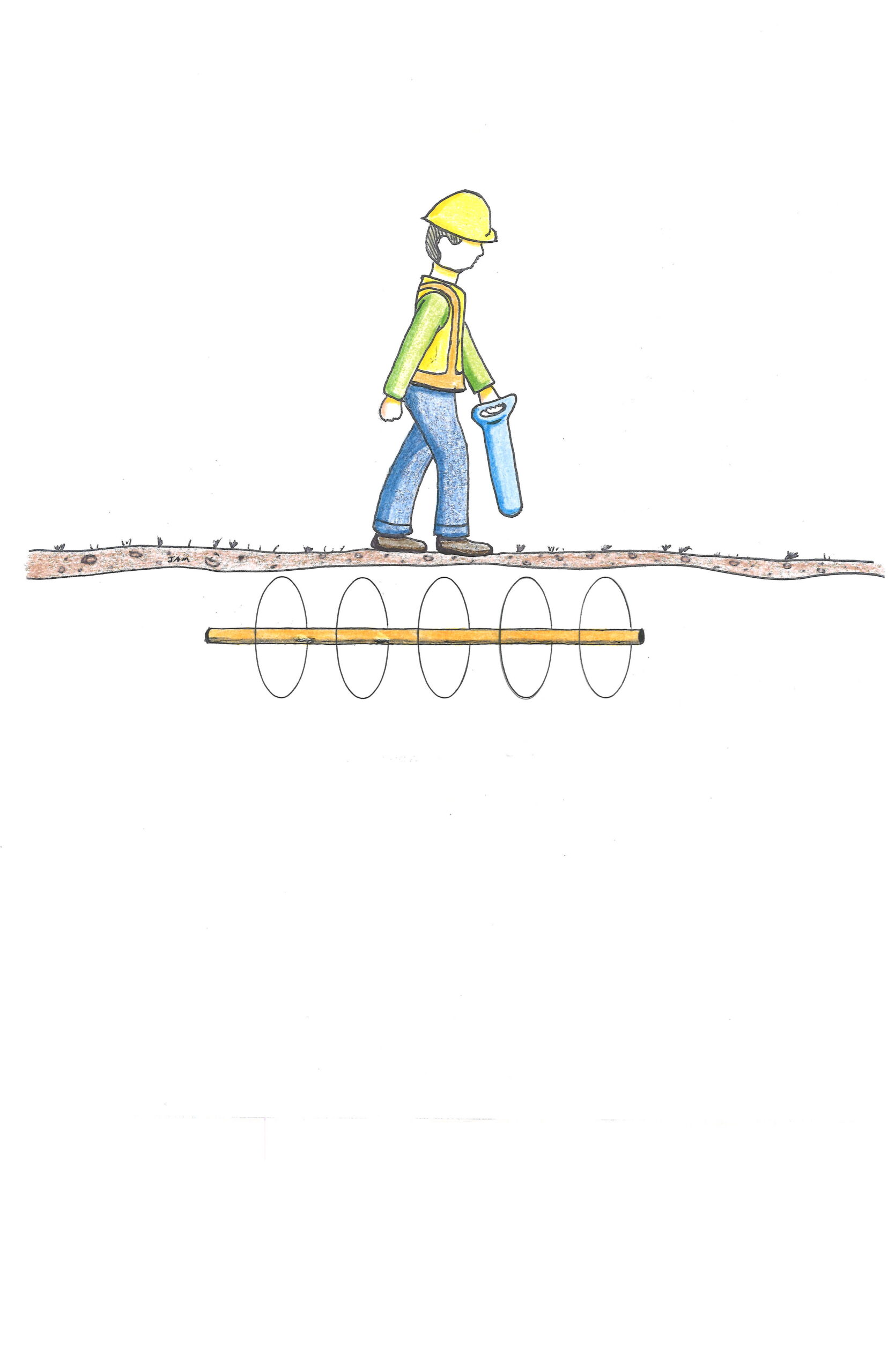
All PCLs operate in the same fundamental way. The transmitter applies a very small amount of current (about 5 to 30 milliamps), and that produces EMF on the utility which can be traced out with the receiver.[/caption]
All PCLs operate in the same fundamental way. The transmitter applies a very small amount of current (about 5 to 30 milliamps), and that produces EMF on the utility which can be traced out with the receiver.
The biggest difference between individual PCLs is the frequency selection. Overall frequency selection on a PCL is between 512Hz and 480 kHz. However, some have only one frequency available, usually very high. Some have 2 frequencies: a mid range and a high frequency. The most useful instruments may have a dozen or more active frequencies including one or more low frequencies (below 1 kHz), and a few passive frequencies such as Radio Passive and Power Passive. All of these frequencies can be very useful, especially when you are trying to locate a variety of utilities in a variety of situations.
Some technicians carry two PCLs in their truck, one for common locating and one with a very high frequency for scanning an area for unknown utilities.